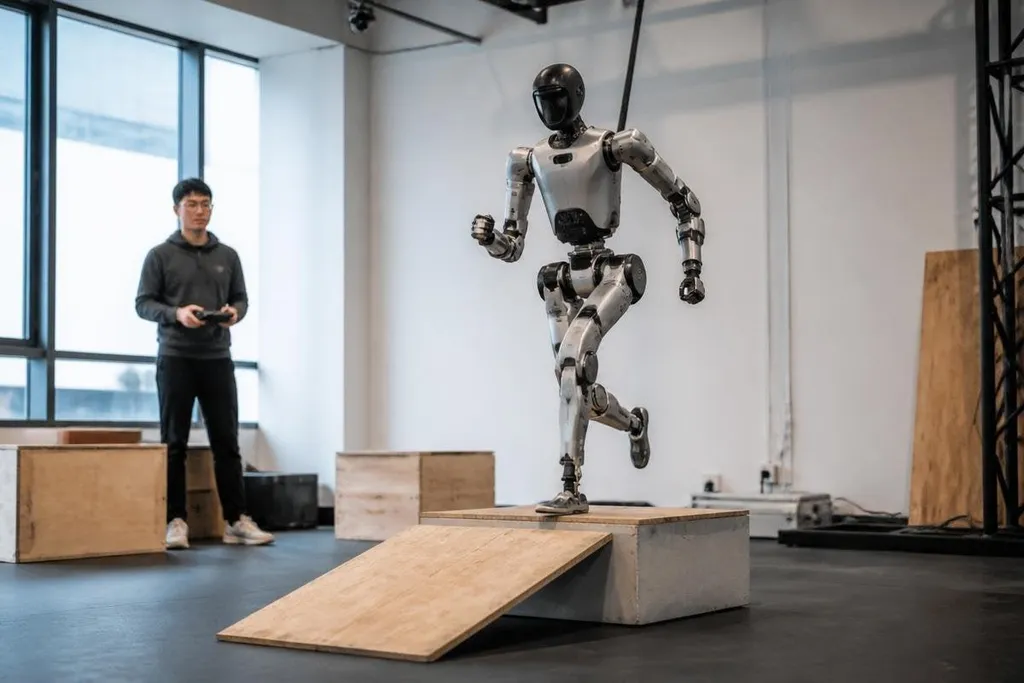
A humanoid robot can move fast in a lab and still work slowly beside a person. The real contest is about useful speed: walking, spotting an object, planning a move, and recovering when the floor or task changes.
- Faster steps mean little if the robot falls during a turn.
- Motor speed competes with battery life, heat, and balance.
- Buyers need task results, not a top speed from one demo.
Speed has several parts
Speed starts with a robot’s legs, but leg motion is only one part of the job. The control system must read cameras and other sensors, estimate the robot’s position, choose a foot placement, and send commands to many motors at once.
That work takes time. A faster processor can cut the delay between sensing and movement, while better software can help the robot choose fewer and smaller corrections. The robot still needs enough grip and joint force to stay upright when it carries a load.
Walking speed also depends on the floor. A smooth test surface gives the robot clean contact with each foot. A warehouse may add loose packaging, ramps, door thresholds, and people who change direction without warning. A speed claim without the floor type, load, distance, and number of failed attempts tells you very little.
The hardware sets limits
Humanoid robots use electric motors, gearboxes, batteries, cameras, force sensors, and computers. Each part affects the others. A motor that moves a joint quickly can draw more power and create more heat, while a larger battery adds weight that the legs must carry.
The feet show the problem clearly. A longer step can raise walking speed, but it also gives the control system less time to correct a slip. A shorter step may look slow on video and still produce better work if the robot stays stable for hours.
Hands create another limit. A robot may walk quickly to a shelf, then lose time because its fingers need several tries to pick up a soft package.
The useful measure is the full task cycle. It covers reaching the shelf, picking up the package, and completing a successful handoff rather than measuring only the fastest motion.
Battery use matters just as much. A robot that moves quickly for a short test may need a long charge stop before it can finish a work period. Heat can also force a lower motor speed, which makes a brief demo a poor guide to repeated work.
What the race should measure
Companies can make speed claims easier to compare by reporting the same details for each test. That means naming the robot, the payload, the surface, the distance, the control mode, and the number of successful runs.
A useful test would report how long the robot takes to complete a set task, how often it stops, and how much help a person gives it. Teleoperation, where a person controls some or all of the robot, should be marked clearly because it changes what the result proves.
A speed number means little without the course length and test conditions. Robot24.com robotics coverage can place a humanoid’s run beside its task, stop count, and human input, so you can compare speed with the work the robot claims to do.
The fastest robot on a short course may lose to a slower robot that needs fewer resets. I’d judge a humanoid by completed work per hour, with its battery, safety stops, and human help recorded beside the result.
What faster movement can change
Higher walking speed could let one robot serve more stations in a large site. It may reach a task sooner, spend less time between work areas, and respond faster when a person asks it to move aside.
Those gains only count when the robot can repeat them. A system that needs a technician after a fall may erase the time saved by its faster walk. The same problem appears when a robot must slow down near people or stop when its sensors lose a clear view.
The best progress may come from faster recovery rather than faster steps. A robot that notices a foot slip, shifts its weight, and continues the task can produce more work than one that runs quickly under perfect conditions.
A buyer’s speed checklist
Before you compare humanoid robots, ask for:
- Task time: the full cycle from pickup to handoff
- Test load: the object weight and size used during the run
- Surface details: floor type, slope, thresholds, and obstacles
- Human input: remote control, spoken commands, or hands-on help
- Repeat data: successful runs, stops, falls, and resets
- Power limits: battery use, charge time, and heat-related slowdowns
Ask for video that shows the complete run, including failed attempts or recovery steps. A clean edit can show motion, but it can’t tell you how often the robot reaches that result.
The humanoid robot race will be decided by repeatable task results, not a single top-speed number. Until companies publish full test conditions and work rates, treat fast movement as a useful signal, not proof that a robot is ready for a worksite.